
 English

Choosing the right flotation device is an important decision for parents, swimming instructors, and children's water safety product buyers. When children start learning to swim, many families consider using an arm float life jacket or a traditional life jacket to provide additional buoyancy and confidence in the water.
Although both products are designed to improve children's swimming safety, they serve different purposes. An arm float life jacket focuses on supporting swimming practice and improving freedom of movement, while a traditional life jacket is mainly designed for maximum buoyancy and emergency water safety.
Understanding the differences between these two types of kids flotation devices can help parents and buyers choose the most suitable solution based on children's age, swimming ability, and application environment.
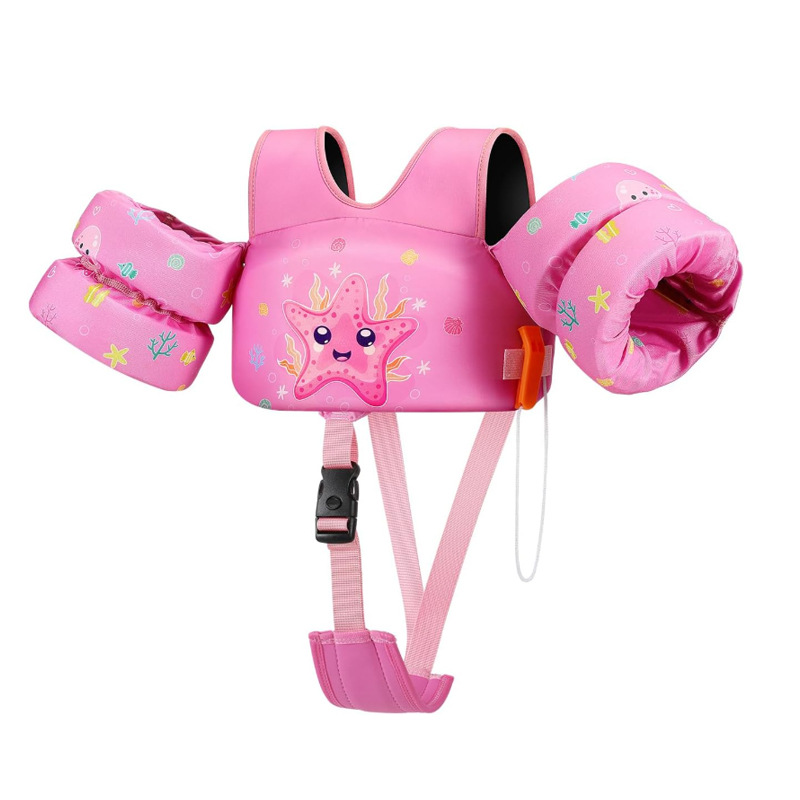
What Is an Arm Float Life Jacket?
An arm float life jacket is a children's swimming aid that combines arm flotation support with a buoyant body design. It is designed to help young swimmers maintain balance in the water while allowing greater freedom of movement compared with traditional life jackets.
Unlike standard life jackets that mainly keep the body upright, arm float life jackets provide support around the arms and upper body, helping children gradually develop swimming skills.
Common features include:
Arm float support
Buoyant foam inserts
Lightweight construction
Adjustable straps
Comfortable fabric materials
Child-friendly designs
Many kids arm float life jackets are made with soft materials such as neoprene, polyester, or EPE foam, providing comfort while maintaining sufficient buoyancy.
What Is a Traditional Life Jacket?
A traditional life jacket, also called a personal flotation device (PFD), is designed primarily for safety and emergency flotation.
Its main purpose is to keep a person's head above water, especially in situations where the wearer may not be able to swim independently.
Traditional life jackets usually feature:
High buoyancy foam
Secure buckles
Adjustable straps
Full torso coverage
Safety-oriented designs
They are commonly used for:
Boating
Water sports
Fishing
Open water activities
Emergency situations
For children who are not confident swimmers or who participate in activities away from swimming pools, traditional life jackets often provide stronger safety protection.
Arm Float Life Jacket vs Traditional Life Jacket: Key Differences
Although both products provide flotation support, their designs and intended uses are different.
| Feature | Arm Float Life Jacket | Traditional Life Jacket |
|---|---|---|
| Main Purpose | Swimming learning and training | Water safety and emergency flotation |
| Buoyancy Level | Moderate support | Higher buoyancy |
| Movement Freedom | Excellent | More restricted |
| Comfort | Lightweight and flexible | More structured |
| Swimming Practice | Suitable | Limited |
| Open Water Safety | Depends on design | More suitable |
| Best For | Beginners and pool learning | Boating and safety use |
1. Buoyancy Performance
Buoyancy is one of the most important factors when selecting a children's flotation device.
Arm Float Life Jacket
Arm float life jackets provide balanced buoyancy that helps children stay comfortable while learning swimming techniques.
Advantages:
Allows natural body movement
Helps children practice kicking and arm strokes
Builds swimming confidence
Because they allow more movement, they are often preferred for swimming lessons and recreational pool use.
Traditional Life Jacket
Traditional life jackets usually provide stronger flotation support.
Advantages:
Keeps the body higher in the water
Provides additional safety during unexpected situations
Suitable for children with limited swimming ability
For boating or open water activities, safety performance is usually the top priority.
2. Freedom of Movement
Movement flexibility is another major difference.
Arm Float Life Jacket
One of the biggest advantages of an arm float life jacket for kids is improved mobility.
Children can:
Move their arms naturally
Practice swimming strokes
Learn water balance more easily
This makes it a popular choice for swimming training.
Traditional Life Jacket
Traditional life jackets cover more of the upper body and provide stronger support.
However, they may:
Limit arm movement
Feel bulkier
Make swimming practice more difficult
They are designed more for protection than skill development.
3. Comfort and Wearing Experience
For children, comfort directly affects whether they are willing to wear a flotation device.
Arm Float Life Jacket
Benefits include:
Lightweight design
Soft materials
Better flexibility
Less restriction during movement
A comfortable swimming aid can help children feel more confident in the water.
Traditional Life Jacket
Traditional models prioritize safety features, which can make them:
Thicker
More structured
Less flexible
However, high-quality designs can still provide good comfort when properly fitted.
4. Suitable Applications
Choosing between an arm float life jacket and a traditional life jacket depends largely on where and how the product will be used.
Arm Float Life Jacket Applications
Ideal for:
Swimming Lessons
Helps beginners gradually learn swimming skills.
Swimming Pools
Provides additional confidence while children practice.
Recreational Water Activities
Suitable for supervised play in controlled environments.
Early Swimming Training
Supports children during their first swimming experiences.
Traditional Life Jacket Applications
Ideal for:
Boating
Provides essential flotation protection.
Open Water Activities
Suitable for lakes, rivers, and oceans.
Water Sports
Designed for situations where safety risks are higher.
Emergency Safety
Provides stronger protection when swimming ability is limited.
Which One Is Better for Kids?
The answer depends on the child's needs and environment.
Choose an Arm Float Life Jacket If:
Your child is learning to swim
Activities are mainly in swimming pools
You want more freedom of movement
Your child needs confidence-building support
An arm float life jacket is often a good choice for swimming development because it allows children to practice movements more naturally.
Choose a Traditional Life Jacket If:
Your child participates in boating activities
The environment involves open water
Maximum flotation safety is required
The child has limited swimming ability
Traditional life jackets are designed for safety-first situations.
How to Choose the Right Arm Float Life Jacket for Kids?
When purchasing an arm float life jacket, consider the following factors:
1. Age and Weight Range
Always select a product suitable for the child's:
Age
Weight
Body size
Proper sizing ensures effective buoyancy and comfortable wearing.
2. Material Quality
High-quality materials improve comfort and durability.
Common materials include:
Neoprene
Polyester fabric
EPE foam
Soft and skin-friendly materials are especially important for children's products.
3. Safety Design
Look for features such as:
Adjustable straps
Secure buckles
Stable flotation structure
Comfortable fit
A properly designed flotation device improves both safety and user experience.
4. Product Certification and Quality Control
For children's water safety products, reliable manufacturing standards are essential.
Professional suppliers should provide:
Material testing
Quality inspection
Safety compliance
Consistent production quality
Why Choose a Reliable Kids Floatation Device Manufacturer?
For retailers, distributors, and brands, selecting the right supplier is just as important as choosing the product design.
A professional arm float life jacket manufacturer can provide:
OEM customization
Custom colors and designs
Different size options
Material selection
Quality control support
Experienced kids life jacket suppliers can help businesses develop products that meet market demands while maintaining safety and reliability.
FAQ
Q1: Is an arm float life jacket safe for children?
Yes, when used correctly and under proper supervision, an arm float life jacket can provide buoyancy support for children's swimming practice and recreational activities.
Q2: Can an arm float life jacket replace a traditional life jacket?
No. Arm float life jackets are mainly designed for swimming training and pool activities, while traditional life jackets are designed for higher-risk water safety situations.
Q3: What age is suitable for an arm float life jacket?
The suitable age depends on the product design, size, and weight range. Parents should always select a model based on the manufacturer's recommendations.
Q4: Which is better for learning swimming: arm float life jacket or traditional life jacket?
For swimming practice, an arm float life jacket usually provides better movement freedom and helps children develop swimming skills more naturally.
Q5: Can manufacturers customize arm float life jackets?
Yes. Professional manufacturers can customize materials, colors, sizes, designs, and branding options for different markets.
Conclusion
Both arm float life jackets and traditional life jackets provide valuable flotation support, but they are designed for different purposes. An arm float life jacket is ideal for swimming practice, confidence building, and supervised pool activities, while a traditional life jacket provides stronger protection for boating and open water safety.
For parents, the best choice depends on the child's swimming ability and activity environment. For businesses looking to source children's swimming products, working with an experienced arm float life jacket manufacturer ensures reliable quality, customization options, and products that meet customer expectations.
Choosing the right flotation solution helps children enjoy water activities safely while developing confidence and swimming skills.